
Why Most Herbal Hair Colours Fail on Grey Hair And How to Choose One That Actually Works
Herbal hair colour may fail on grey hair when pigment strength is weak, formulation balance is poor, or the colour is not left on long enough to develop properly.
Many people switch to herbal hair colour after experiencing scalp irritation, dryness, or strong chemical smells from traditional hair dyes. Herbal formulations promise a gentler alternative because they often contain plant based ingredients traditionally used for hair care and colouring.
Because of this, many users expect smoother application, less irritation, and healthier hair after colouring.
However, the experience does not always match expectations.
People frequently report problems such as:
• Patchy grey coverage
• Orange or copper tones appearing unexpectedly
• Colour fading faster than expected
• Uneven colour near the roots
When this happens, many assume that herbal hair colour simply does not work on grey hair.
In reality, the issue is rarely the concept of herbal colouring itself. The outcome usually depends on three factors:
• Formulation quality
• Pigment balance
• Correct application method
Understanding how herbal hair colour works and why some formulations fail on grey hair can help you choose products that deliver better results. If you want to explore different shades and formulations designed for grey coverage, you can browse the herbal hair colour options available for natural looking grey hair coverage.
Why Do Herbal Hair Colours Fail on Grey Hair?
Herbal hair colours may fail on grey hair when pigment concentration is weak, the formulation lacks colour fixation support, or the colour is not left on long enough to develop properly. Grey hair has a more resistant structure, so stronger pigment balance is often required for consistent coverage.
What Is Herbal Hair Colour?
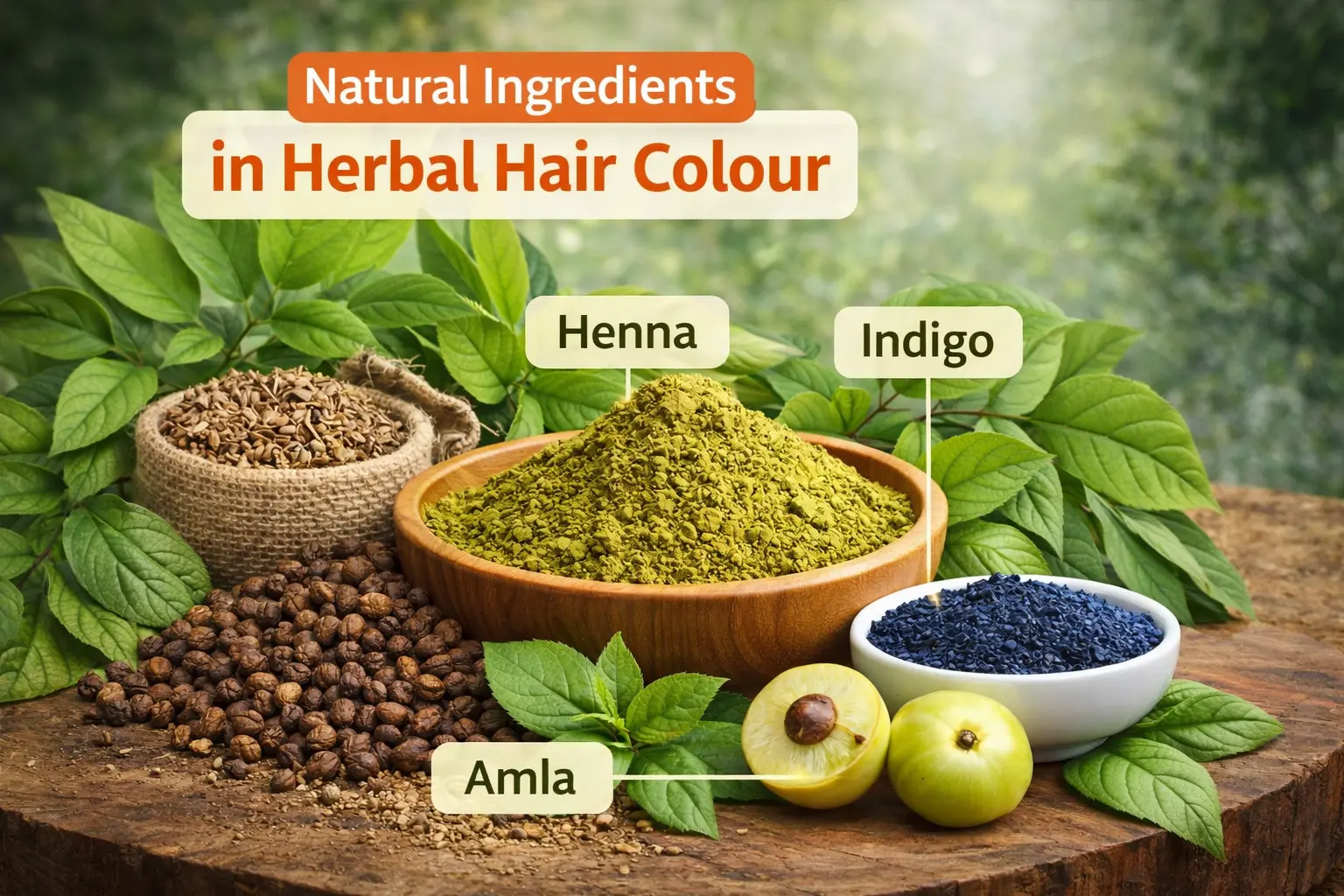
Herbal hair colour is a hair dye formulation that uses plant derived pigments and conditioning herbs to colour hair while supporting scalp health. Traditional ingredients often include henna and indigo, sometimes combined with herbs like bhringraj and amla.
These plant ingredients have been used in traditional hair treatments for centuries. For example, henna has been widely used as a natural dye in many cultures because it binds to the outer layer of the hair shaft and produces a reddish base tone.
Unlike many conventional hair dyes that rely on strong chemicals to open the hair cuticle and force pigment inside, herbal hair colour usually works by coating or binding pigment to the hair surface. This process is gentler, but it also depends more on ingredient strength and processing time.
Because of this difference, results with herbal hair colour can vary depending on factors such as hair texture, percentage of grey hair, and the balance of pigments in the formulation.
Why Grey Hair Is Harder to Colour
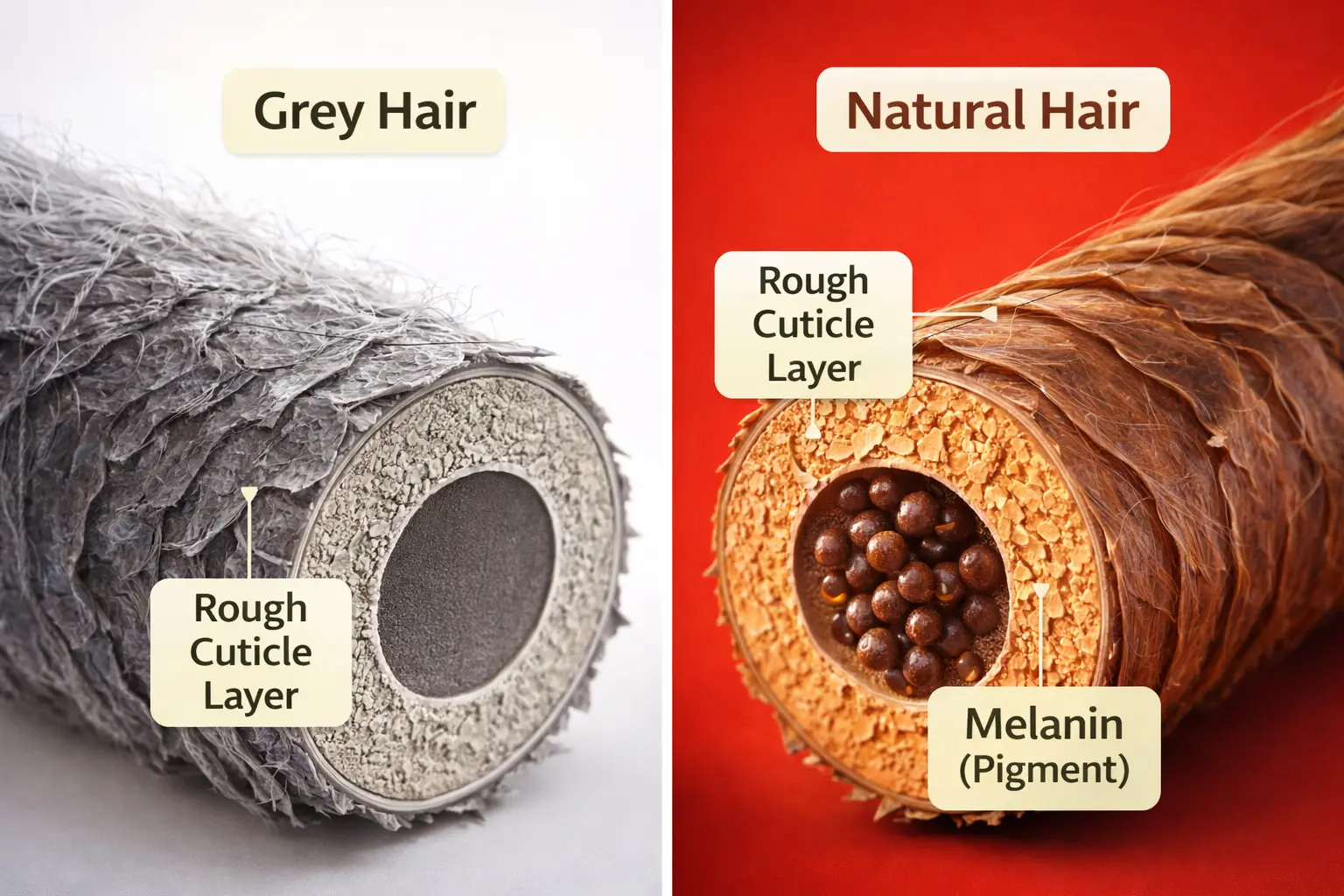
Grey hair behaves differently from naturally pigmented hair, which is one of the main reasons many people experience uneven results when using herbal hair colour.
Hair gets its natural colour from a pigment called melanin, which is produced by pigment cells in hair follicles. As people age, the production of melanin gradually decreases. When melanin levels drop significantly, hair appears grey or white.
According to the National Institutes of Health, hair greying occurs when pigment producing cells in hair follicles reduce or stop producing melanin.
Source: https://www.ncbi.nlm.nih.gov/books/NBK278957/
When this happens, the structure of the hair strand can change in several ways:
- Lower pigment absorption: Without natural pigment, colour molecules have fewer binding points.
- More resistant cuticle: Grey hair often has a tighter outer layer, making it harder for pigments to attach evenly.
- Coarser texture: Many people notice that grey hair feels thicker or wiry compared to their original hair texture.
- Uneven colour development: Because the structure varies from strand to strand, colour may appear darker in some areas and lighter in others.
Traditional chemical hair dyes usually solve this problem by using strong ingredients that aggressively open the hair cuticle and push colour molecules into the hair shaft.
Herbal hair colour works differently. Instead of forcing pigment deep into the hair structure, plant pigments mostly bind to the outer layer of the hair or gradually build colour with repeated applications.
This gentler mechanism is why herbal colouring can feel less harsh on the scalp, but it also means that formulation quality and pigment strength become extremely important when colouring grey hair.
Understanding this difference helps explain why some herbal hair colours perform well while others struggle to cover resistant grey strands.
How Herbal Hair Colour Actually Works
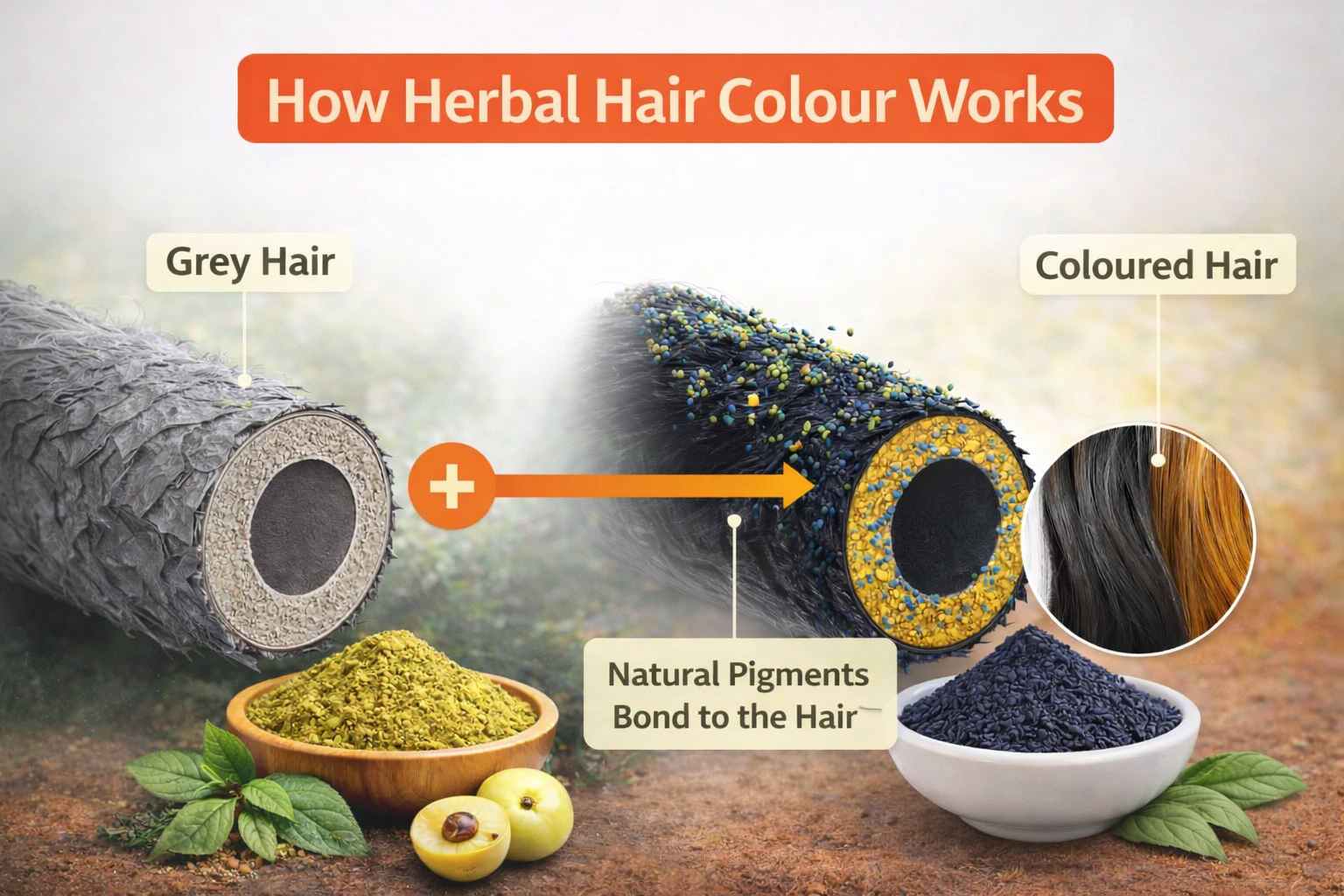
To understand why some herbal hair colours perform better than others, it helps to look at how plant based pigments interact with hair.
Human hair is primarily made of a structural protein called keratin. This protein forms the outer and inner layers of the hair strand.
Herbal hair colour works by allowing plant pigments to bind to or coat this protein layer.
The two most common natural colouring ingredients are:
- Henna
- Indigo
Each ingredient plays a different role in colour development.
Henna: The Base Pigment
Henna contains a dye molecule called lawsone, which binds naturally to keratin in the hair shaft and produces a reddish or copper base tone.
This base colour creates the foundation for darker shades when combined with other pigments.
Indigo: The Darkening Pigment
Indigo is often used together with henna to produce brown or black shades. Indigo pigments develop through oxidation when exposed to air and bind over the henna base.
The balance between henna and indigo determines the final shade outcome.
Supporting Herbal Ingredients
Many herbal formulations also include conditioning herbs such as:
- Bhringraj
- Amla
- Shikakai
These ingredients do not always provide strong colouring pigments, but they help improve hair texture, shine, and scalp comfort during the colouring process.
Why Formulation Balance Matters
The effectiveness of herbal hair colour depends heavily on the ratio and quality of these ingredients.
If pigment concentration is too weak, grey hair may not absorb enough colour. When herbal pigments are balanced correctly with supporting ingredients, the formulation can deliver deeper shades and more reliable grey coverage.
This is why two products labeled herbal hair colour can produce very different results. The formulation balance and pigment strength determine the final performance.
The Real Reasons Many Herbal Hair Colours Fail on Grey Hair
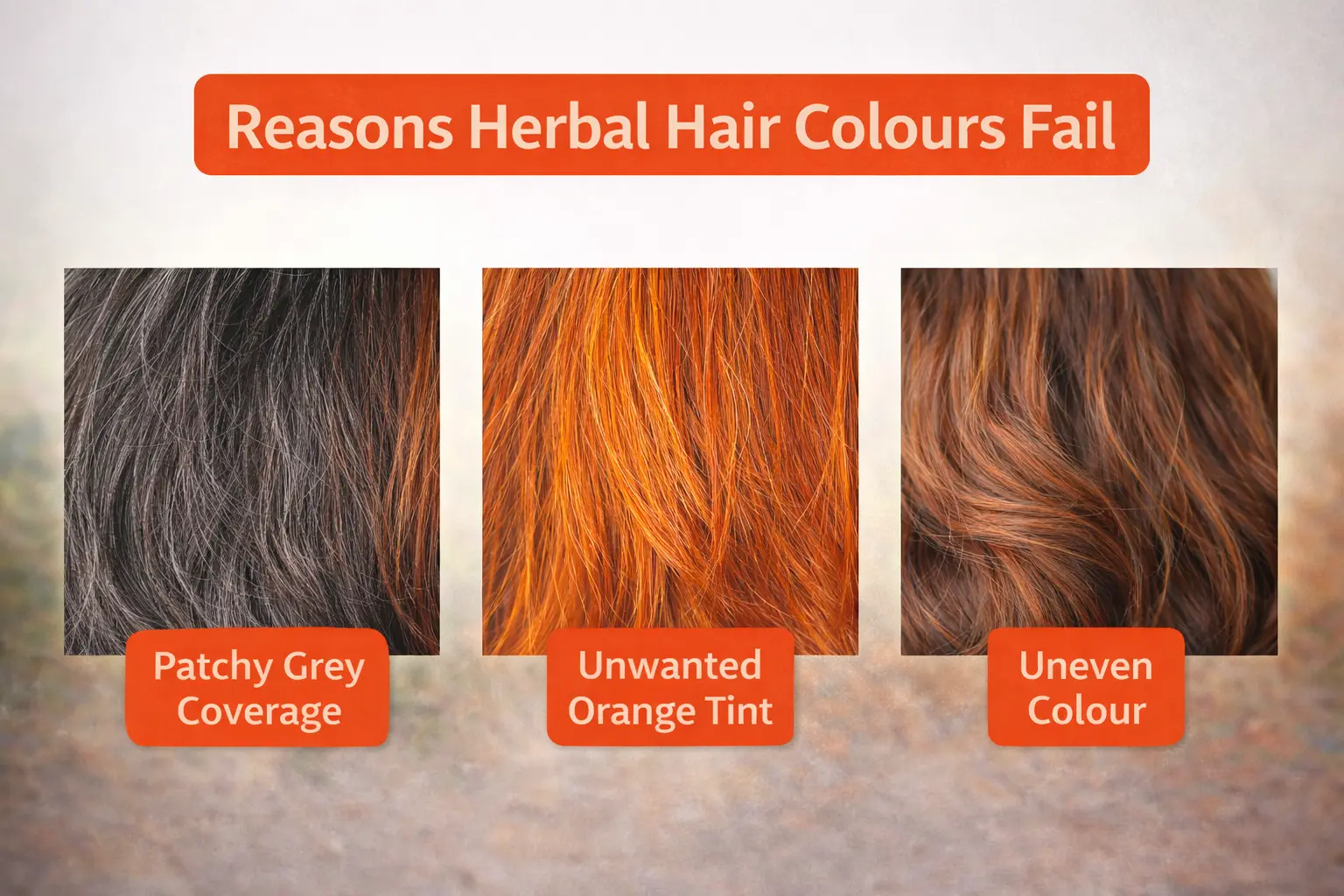
When herbal hair colour produces weak or uneven results on grey hair, the issue is usually not the concept of herbal colouring itself. In most cases, the problem comes down to formulation quality, pigment balance, or application technique.
Understanding these factors can help you avoid disappointing results and choose products that perform more reliably.
1. Low Pigment Strength
Grey hair requires stronger pigment concentration than naturally pigmented hair.
If a product contains diluted or low quality colouring ingredients such as henna or indigo, the colour may appear weak or uneven.
This often leads to problems such as:
- Light grey strands remaining visible
- Inconsistent colour depth
- Faded shades after only a few washes
Products with higher pigment concentration generally produce deeper and more stable colour results.
2. Poor Colour Fixation
Some herbal powders rely entirely on plant pigments that coat the hair surface. While this approach can work well for conditioning treatments, it may struggle to achieve strong grey coverage.
Many modern herbal based formulations include colour supporting cosmetic ingredients that help pigments attach more effectively to the hair structure.
Without proper fixation support, colour may wash out quickly or fail to develop fully on resistant grey strands.
3. Insufficient Processing Time
Plant pigments need time to bond with the hair surface.
If the colouring mixture is rinsed out too early, the pigments may not have enough time to develop fully. This can result in:
- Uneven tones
- Weak colour intensity
- Visible grey roots
Following the recommended development time on the product instructions is essential for achieving deeper colour.
4. Misleading “100% Natural” Marketing
Some products emphasize the idea of being completely natural but do not clearly explain performance limitations.
Pure herbal powders can provide beautiful natural tones, but they may require longer application times or multiple treatments to build darker shades.
Transparent formulations that clearly explain their ingredients and performance expectations tend to deliver more predictable results.
5. Incorrect Application Technique
Even a well formulated herbal hair colour may produce poor results if it is applied incorrectly.
Common mistakes include:
- Applying product unevenly
- Skipping grey roots
- Using a mixture that is too watery
- Rinsing before full processing time
Proper application, including sectioning the hair and saturating grey areas first, significantly improves the chances of achieving even coverage.
Understanding these factors helps explain why some herbal hair colours perform much better than others. When the pigment balance, formulation quality, and application technique are aligned correctly, herbal hair colour can produce much more consistent results on grey hair.
Natural Shades You Can Achieve with Herbal Hair Colour
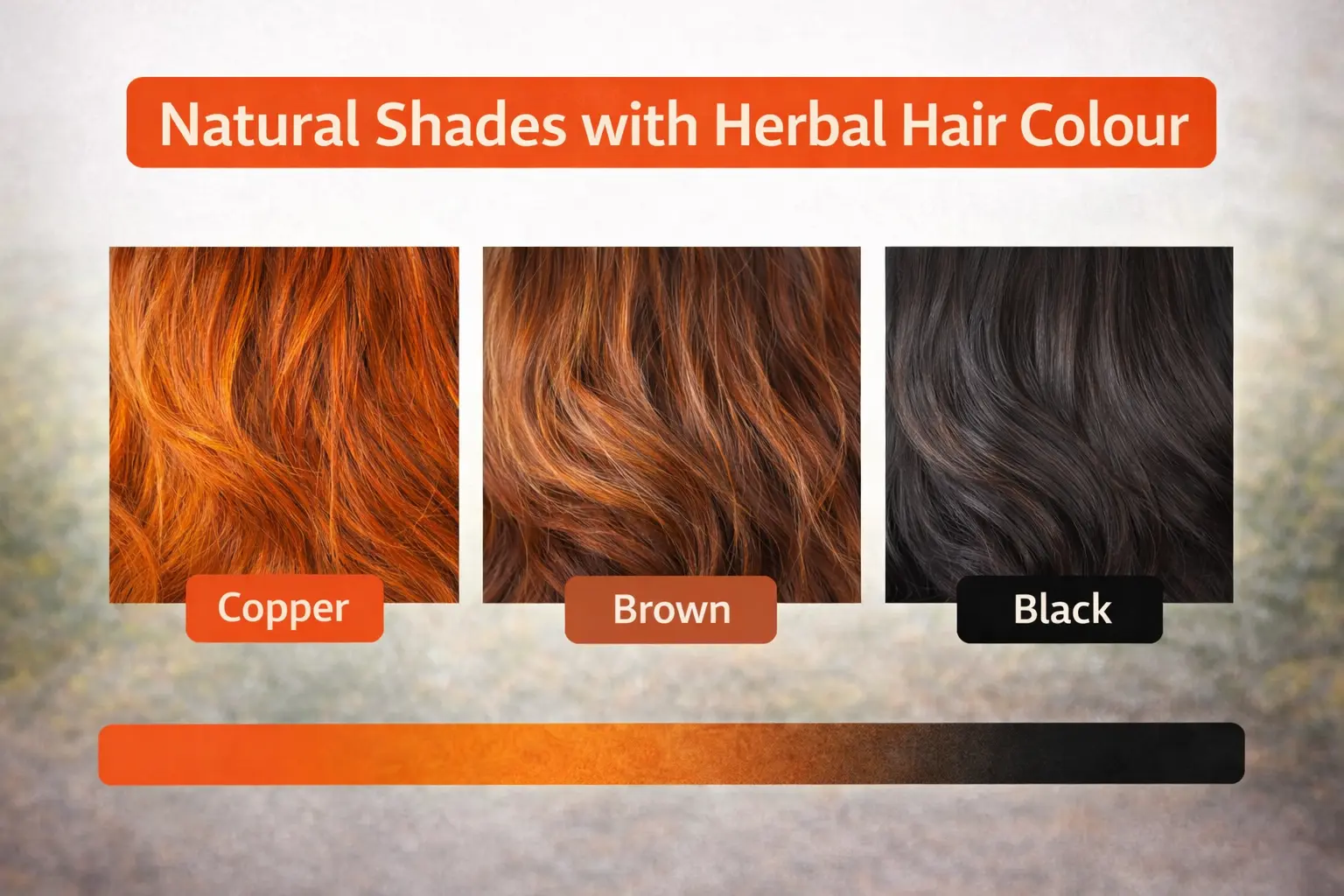
One advantage of herbal hair colouring is that different plant pigments can be combined to produce a variety of natural looking shades.
The final colour result depends mainly on the balance between ingredients such as henna and indigo.
Henna provides the base tone, while indigo helps deepen the colour to darker shades. Conditioning herbs like amla can also influence tone and shine.
Below is a simplified overview of how common ingredient combinations affect hair colour.
| Ingredient Combination | Typical Shade Result |
| Henna alone | Copper or reddish tone |
| Henna plus small amount of indigo | Light brown |
| Balanced henna and indigo | Medium to dark brown |
| Indigo dominant mix | Natural black |
Because herbal pigments build colour gradually, results may vary depending on:
- Percentage of grey hair
- Natural hair colour
- Processing time
- Number of applications
Grey hair in particular may require stronger pigment balance or repeated applications to achieve deeper shades.
Understanding how these pigments interact helps users choose the right herbal hair colour formulation for their desired result.
Herbal Hair Colour vs Chemical Hair Dye
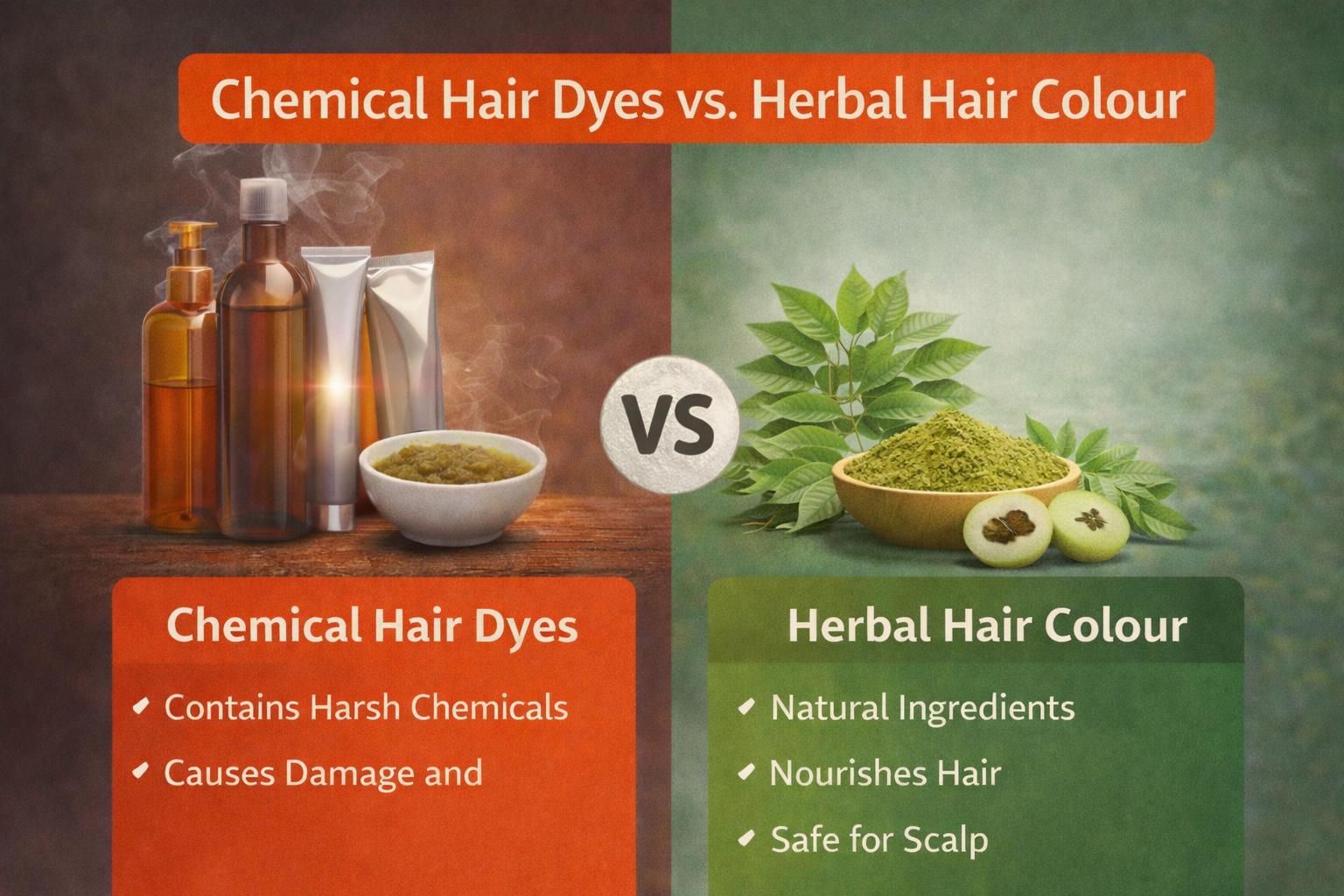
Many people consider switching to herbal hair colour because they want to avoid the harsh effects sometimes associated with Traditional chemical hair dyes often rely on stronger ingredients, which is why many people later research the long term effects of chemical hair colour damage. Understanding the differences between these two approaches can help you choose the option that suits your needs.
Conventional permanent hair dyes often rely on chemicals such as ammonia and paraphenylenediamine, which are commonly used in oxidative hair dye formulations to penetrate the hair shaft and deposit colour deeply inside.
According to the American Cancer Society, PPD is widely used in permanent hair dyes because it helps create long lasting colour, although it can cause allergic reactions in some individuals.
Source: https://www.cancer.org/cancer/risk-prevention/chemicals/hair-dyes.html
Herbal hair colour works in a different way. Instead of forcing pigment deep into the hair structure, plant based pigments usually bind to or coat the outer layer of the hair strand.
Below is a simplified comparison.
| Feature | Herbal Hair Colour | Traditional Chemical Hair Dye |
| Pigment source | Plant pigments such as henna and indigo | Synthetic dye molecules |
| Cuticle action | Gradual binding or coating | Strong penetration into hair shaft |
| Smell | Mild herbal scent | Often strong chemical smell |
| Conditioning | Often includes herbs that support hair texture | Usually limited conditioning |
| Grey coverage | Depends on formulation strength | Typically immediate penetration |
| Irritation risk | Often lower when used properly | May cause sensitivity in some users |
Many users prefer herbal formulations because they provide a balance between colouring and conditioning. However, the performance of herbal hair colour depends heavily on ingredient quality and pigment strength.
Choosing the right formulation can make a significant difference in achieving reliable grey coverage while maintaining hair health.
How to Choose a Herbal Hair Colour That Covers Grey Hair
Not all herbal hair colour products perform the same. Some are simple herbal powders designed mainly for conditioning, while others are formulated specifically to improve grey coverage.
If you want consistent results on grey hair, evaluating a few key factors before choosing a product can make a significant difference.
1. Check Ingredient Transparency
A reliable product should clearly list its ingredients.
Look for well known colouring herbs such as henna and indigo along with supportive herbs like bhringraj or amla.
Transparent ingredient lists help users understand how the product is designed to perform.
2. Look for Ammonia Free Formulations
Many users prefer ammonia free hair colour because it generally produces less harsh odour and may feel gentler on the scalp compared with traditional chemical dyes that rely on strong cuticle opening agents such as ammonia.
Ammonia free products can still provide effective colouring when pigment strength and formulation balance are properly designed.
3. Confirm Grey Coverage Capability
If covering grey hair is your goal, the product should clearly mention its performance on grey strands.
Grey hair often requires stronger pigment concentration and balanced formulation support to achieve deeper and more even colour.
4. Evaluate Processing Time
Traditional herbal dye treatments sometimes require several hours to develop colour fully. However, many modern herbal based formulations are designed to work within shorter processing times.
A practical development time, for example around 30 minutes, can make regular hair colouring easier to maintain.
5. Read Real Customer Reviews
User feedback can reveal how a product performs in real conditions.
Reviews often provide insights into:
- Grey coverage performance
- Ease of application
- Scalp comfort
- Colour longevity
Looking at genuine customer experiences can help you set realistic expectations before choosing a product.
Exploring Herbal Hair Colour Options
If you want to compare different shades and formulations designed for grey coverage, you can explore the herbal hair colour range to find options that match your hair type and colouring needs.
Browsing a full range of options allows you to evaluate ingredient transparency, colour shades, and product reviews before selecting the formulation that suits your hair type and grey coverage requirements.
How to Apply Herbal Hair Colour for Maximum Grey Coverage
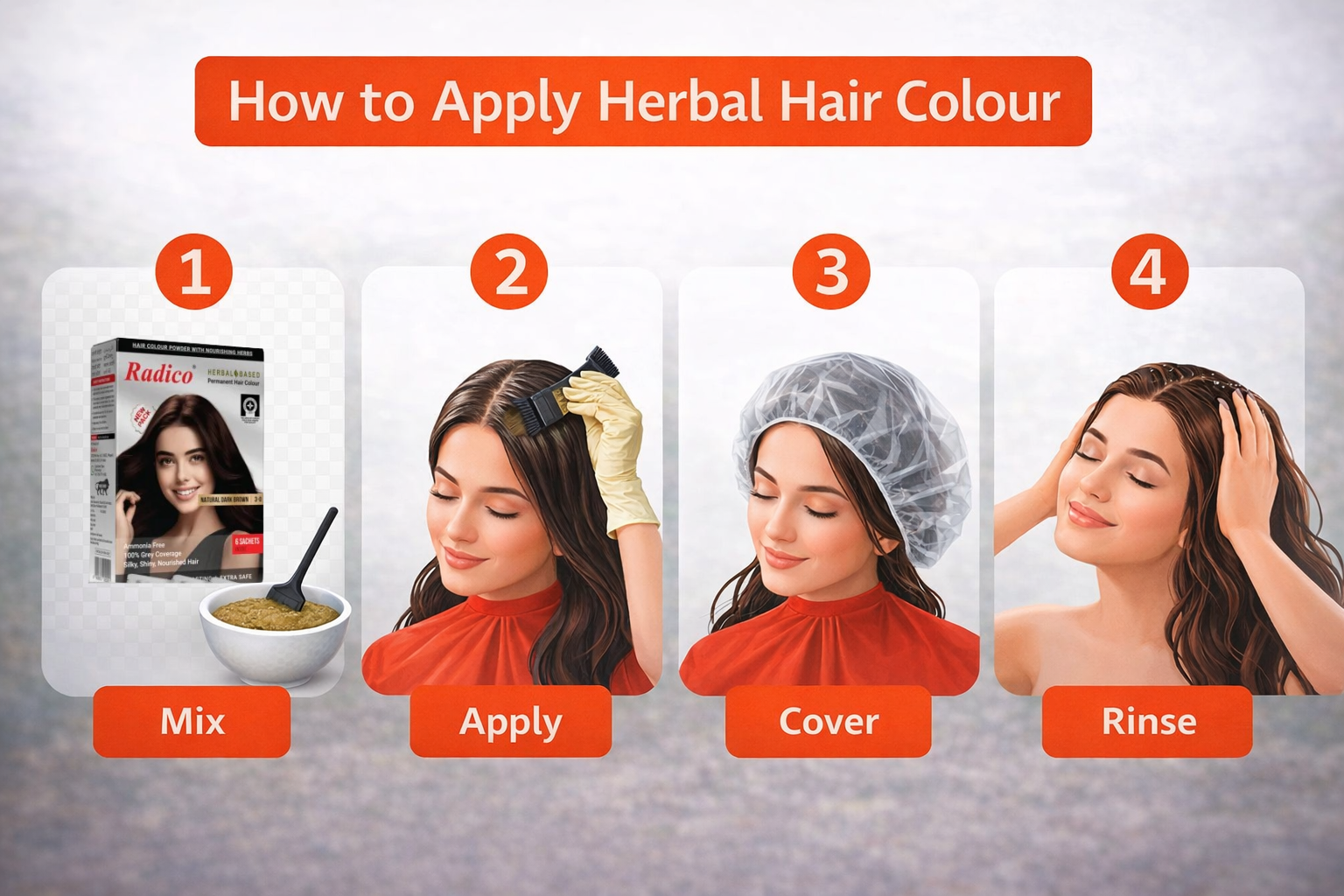
Even a well formulated herbal hair colour may produce uneven results if it is not applied correctly. Proper preparation and application technique can significantly improve grey coverage and colour consistency.
Follow these steps to achieve more reliable results.
Step 1: Prepare the Mixture Properly
Always follow the mixing instructions provided on the product packaging.
The mixture should be smooth and thick enough to stay in place during application. A mixture that is too watery may drip and lead to uneven colour distribution.
Step 2: Section the Hair
Divide the hair into small sections before applying the colour.
This step helps ensure that every part of the hair receives an even amount of product. Grey hair often appears first around the temples and roots, so careful sectioning helps target these areas more effectively.
Step 3: Apply Colour to Grey Roots First
Grey roots usually require the most pigment exposure.
Start applying the mixture directly to the grey areas before spreading the colour through the rest of the hair. This gives resistant strands more time to absorb pigment.
Step 4: Allow Full Processing Time
Plant based pigments need time to bind to the hair structure.
Leaving the colour on for the full recommended processing time helps pigments attach properly to the hair’s outer layer, which is primarily composed of keratin.
Removing the product too early can result in lighter or uneven colour.
Step 5: Rinse Thoroughly
After the processing time is complete, rinse the hair thoroughly with lukewarm water until the water runs clear.
This removes excess pigment and prevents residue from remaining on the scalp.
Step 6: Gently Shampoo the Hair
After rinsing, wash the hair with a mild shampoo to remove any remaining product residue.
Using a gentle shampoo can help maintain colour and avoid unnecessary dryness after colouring.
Following these steps can significantly improve colour development and help herbal hair colour produce more even and consistent results on grey hair.
Safety and Sensitivity Considerations
Although many people choose herbal hair colour because it may feel gentler than traditional dyes, it is still important to use any hair colouring product carefully.
Even plant based formulations can contain ingredients that may cause irritation in sensitive individuals. Taking simple precautions can help reduce this risk.
Perform a Patch Test Before Use
Most hair colour manufacturers recommend performing a patch test at least 48 hours before full application.
Apply a small amount of the product to a small area of skin, usually behind the ear or on the inner arm. Check for reactions such as redness, itching, or swelling before applying the product to the entire scalp.
Understand What Ammonia Free Means
Many herbal hair colour products are labeled ammonia free, meaning they do not use ammonia to open the hair cuticle.
In traditional permanent dyes, ammonia raises the hair pH and opens the hair shaft so colour molecules can penetrate the fiber.
Source: https://en.wikipedia.org/wiki/Hair_coloring
Ammonia free products may still contain other cosmetic ingredients that help pigments attach to the hair. Understanding this distinction helps users make informed decisions when selecting hair colouring products.
Consider Individual Hair and Scalp Sensitivity
Hair and scalp sensitivity can vary from person to person.
Factors that may influence sensitivity include:
- Existing scalp conditions
- Previous allergic reactions to hair dye
- Frequency of colouring treatments
If you have experienced strong reactions to hair dyes in the past, it may be helpful to consult a dermatologist before using a new colouring product.
Results Can Vary Between Individuals
The final colour result of herbal hair dye may vary depending on several factors, including:
- Percentage of grey hair
- Natural hair colour
- Hair thickness and texture
- Washing frequency
- Aftercare routine
Because herbal pigments interact mainly with the outer structure of the hair, repeated applications may gradually deepen the colour over time.
Understanding these factors helps set realistic expectations and improves the overall colouring experience.
Frequently Asked Questions
Does herbal hair colour really cover 100% grey hair?
Herbal hair colour can cover grey hair effectively when the formulation contains strong plant pigments and is applied correctly. Products that balance colouring ingredients such as henna and indigo usually provide deeper shades and better grey coverage.
However, results may vary depending on the percentage of grey hair, the formulation strength, and the application method.
Why does grey hair sometimes turn orange after herbal dye?
Grey hair may turn orange when the colouring mixture contains mostly henna without enough balancing pigments such as indigo.
Henna naturally produces warm reddish tones. Without proper pigment balance or sufficient processing time, grey strands can develop copper or orange shades.
Is herbal hair colour safer than chemical hair dye?
Many people prefer herbal hair colour because plant based formulations may feel gentler on the scalp compared with dyes that rely on stronger chemical agents such as ammonia.
However, safety depends on the formulation and individual sensitivity. Performing a patch test before full application is always recommended.
How long does herbal hair colour last?
The longevity of herbal hair colour depends on several factors, including pigment strength, hair type, washing frequency, and aftercare routine.
In many cases, the colour can last several weeks before gradual fading becomes noticeable.
Does herbal hair colour damage hair?
Most herbal hair colour formulations include conditioning herbs that help support hair texture and shine. Unlike some traditional dyes that aggressively open the hair cuticle, herbal pigments mainly bind to the outer layer of the hair.
When used correctly, many people find herbal hair colour less drying than stronger chemical dyes.
Is ammonia free the same as chemical free?
No. Ammonia free means the product does not contain ammonia.
However, some hair colouring formulations may still include other approved cosmetic ingredients that help stabilize colour or improve pigment fixation.
Can men use herbal hair colour for grey hair?
Yes. Herbal hair colour can be used by both men and women. Many people choose herbal formulations because they provide natural looking colour and usually have a milder scent during application.
Choosing the Best Herbal Hair Colour for Grey Hair
Grey hair often exposes weaknesses in hair colour formulations more quickly than naturally pigmented hair. When herbal hair colour produces patchy or uneven results, the issue is usually not the idea of herbal colouring itself but the balance between pigment strength, formulation quality, and correct application.
Plant based colouring ingredients such as henna and indigo can deliver effective colour when they are used in the right proportions and allowed enough processing time to develop properly.
To achieve better results on grey hair, it helps to focus on a few practical factors:
• Choose products with transparent ingredient lists
• Look for balanced pigment formulations designed for grey coverage
• Follow proper application techniques
• Allow the full processing time recommended by the manufacturer
If you want to explore different shades and formulations designed for grey coverage, you can browse the herbal hair colour options available for different hair types and colour preferences.
Reviewing ingredients, pigment balance, and user feedback can help you choose a product that matches your hair type and grey coverage needs.
With the right formulation and correct application method, herbal hair colour can provide natural looking results while maintaining a gentler colouring routine over time.