
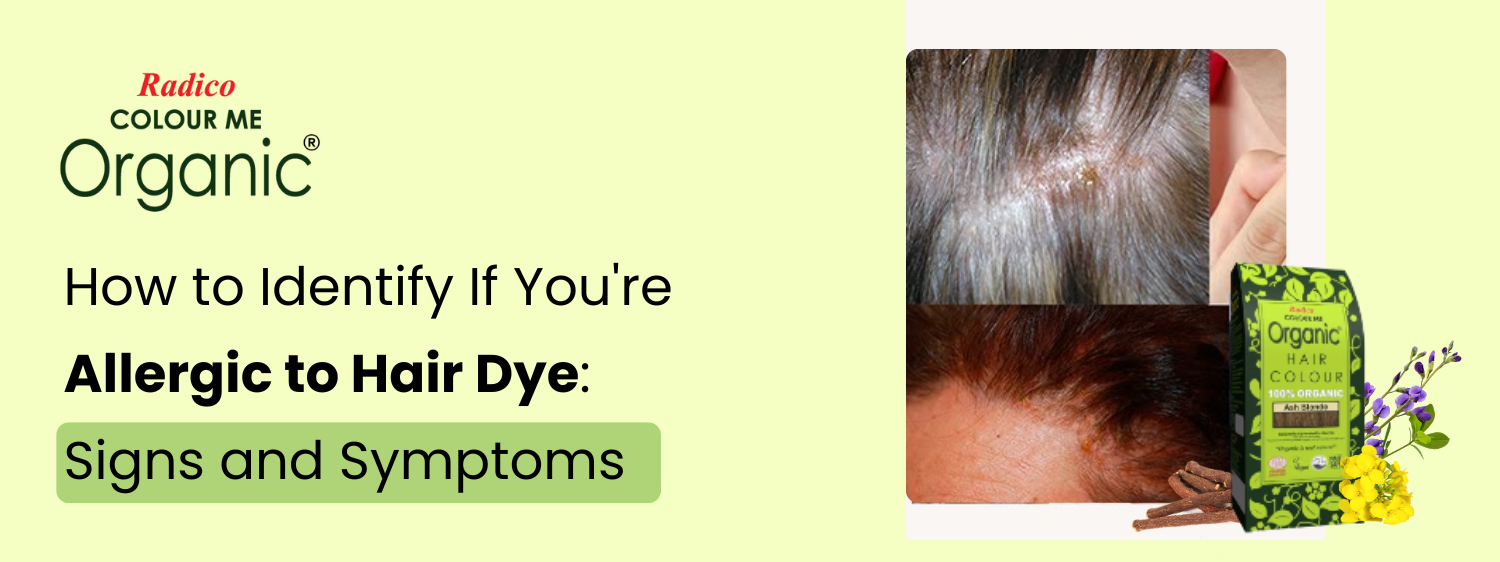
How to Identify If You’re Allergic to Hair Dye: Signs and Symptoms
For many people, colouring their hair is part of their regular self-care routine. But if every colouring session leaves your scalp burning, itchy, or covered in rashes, your body may be trying to tell you something important: you might be allergic to your hair dye.
For those with a sensitive scalp, switching to a chemical free hair colour or organic hair colour can make a huge difference, especially if you’ve already experienced discomfort from regular dyes. This guide explains how to recognise a true hair dye allergy, what signs to watch for, and why options like Radico Colour Me Organic can be a gentler choice.
What Is a Hair Dye Allergy?
A hair dye allergy is an immune reaction to one or more ingredients in your hair colour product. Unlike simple irritation (which is more surface-level and temporary), an allergy involves your immune system seeing an ingredient as “dangerous” and overreacting to it.
The most common trigger in conventional dyes is para-phenylenediamine (PPD), a strong chemical used in many permanent and dark shades. Even if you’ve used the same product for years, an allergy can develop suddenly over time.
This is why people with sensitive scalp, eczema, psoriasis, or a history of skin allergies need to be especially careful with synthetic hair colour products and should look for allergy free hair colour or hair colour for sensitive scalp wherever possible.
Hair Dye Allergy vs. Normal Irritation: What’s the Difference?
Not every uncomfortable feeling after colouring means you’re allergic. Sometimes it is just irritation, especially if:
- The dye stayed on too long
- The product was very strong or high-lift
- The scalp was already dry, flaky, or sunburnt
Typical irritation can include:
- Mild stinging or tightness on the scalp during application
- Slight redness that goes away within a few hours
- Temporary dryness or roughness of the scalp
An allergy, on the other hand, is usually stronger, lasts longer, and may spread beyond the scalp. Symptoms can appear hours or even days after colouring and may get worse instead of better.
Early Signs You May Be Allergic to Hair Dye
If you’re sensitive to hair dye ingredients, your body often gives early warning signs. Pay attention to these, especially if they appear after every colouring session:
- Itching on scalp, hairline, ears, or neck
- Redness or rash where the colour touched the skin
- Burning or stinging sensation during or after application
- Dry, scaly, or flaky patches along the hairline or behind the ears
- Swelling on the eyelids, forehead, or around the ears
- Tiny bumps or blisters near the scalp or neck
These early signs are your cue to stop using that product immediately and avoid colouring again until you understand what caused the reaction.
Delayed Symptoms: When the Reaction Shows Up Later
One tricky thing about hair dye allergies is that symptoms don’t always show up right away. Some people feel fine on the day of colouring, but notice problems 24–48 hours later, such as:
- Intense itching that worsens over time
- Oozing or crusting skin on the scalp or along the hairline
- Thick, inflamed patches that feel sore or hot to the touch
- Skin darkening or discoloration where the dye was applied
- Rash spreading to the face, neck, or even upper body
If each colouring session triggers this type of delayed response, it is a strong sign that you may be dealing with an allergic contact dermatitis from hair dye.
Serious Allergy Symptoms: When It’s an Emergency
In rare cases, hair dye allergies can cause a severe reaction. This needs urgent medical attention. Stop using the product immediately and seek emergency help if you notice:
- Severe facial swelling (eyes, lips, tongue, or throat)
- Difficulty breathing, wheezing, or tightness in the chest
- Hives all over the body
- Dizziness, fainting, or feeling like you might pass out
These symptoms can indicate anaphylaxis, a life-threatening allergic reaction. Never ignore them or try to treat them at home.
Common Triggers in Conventional Hair Dyes
Most conventional permanent and semi-permanent hair dyes contain a combination of chemicals that can be harsh on sensitive skin. The most common culprits include:
- PPD (para-phenylenediamine): widely used in dark and permanent shades
- Resorcinol: another dye ingredient that can irritate the skin
- Ammonia: used to open the hair cuticle, often causes strong smell and irritation
- Fragrances and preservatives: can also cause allergic skin reactions
If you react to one product, you may also react to others containing the same or similar chemicals. This is why many people with allergies turn to organic hair colour that avoids these harsh ingredients.
How to Test If You’re Allergic: Patch Testing
Before using any new hair colour, even a product labelled as allergy free hair colour it is wise to do a patch test.
Here’s a simple way to patch test at home (always follow the brand’s own instructions as well):
- Mix a small amount of the hair colour as directed.
- Apply a tiny amount behind your ear or on the inside of your elbow.
- Let it dry and leave it on for at least 24–48 hours.
- Watch the area for any signs of itching, redness, bumps, or swelling.
If you notice any reaction, do not use the product on your scalp or hair.
For those with a very sensitive scalp, consulting a dermatologist or allergist for a proper allergy test is an excellent step before continuing to colour your hair.
What to Do If You Suspect a Hair Dye Allergy
If you recognise some of the symptoms above, take these actions:
- Stop using the product immediately. Do not “wait to see if it improves” with repeated use.
- Gently rinse your hair and scalp with lukewarm water and a mild, fragrance-free shampoo.
- Avoid scratching, even if it is very itchy – scratching can damage your skin further and cause infection.
- Use a soothing, hypoallergenic moisturiser on affected areas (if your doctor agrees).
- Consult a dermatologist, especially if the reaction is strong, persistent, or repeatedly triggered by hair dye.
Going forward, it is important to switch to safer alternatives that are better suited for sensitive or allergy-prone skin.
Why Organic Hair Colour Is Better for Sensitive Scalp
For people with a history of irritation or allergy from regular dyes, organic hair colour made from certified organic herbs can be a game-changer.
A truly chemical free hair colour:
- Avoids harsh chemicals like PPD, ammonia, resorcinol, and parabens
- Uses plant-based ingredients to gently coat the hair shaft
- Is typically gentler on the scalp and hair, making it ideal as a hair colour for sensitive scalp
- Helps improve hair texture and shine instead of weakening it
This does not mean that no one will ever react to natural ingredients—some people may still be sensitive to certain herbs. But the overall risk and intensity of reactions are usually much lower compared to strong synthetic dyes.
Radico Colour Me Organic: A Safer Option for Sensitive Scalps
If you have experienced stinging, redness, or allergic reactions from chemical dyes, Radico Colour Me Organic offers a natural alternative for colouring your hair more safely and gently.
Radico Colour Me Organic is designed for conscious consumers looking for:
- 100% Natural and Organic Hair Colour: Made from certified organic herbs, without exposure to harsh chemical dye agents.
- Chemical Free Hair Colour: Free from ammonia, PPD, resorcinol, parabens, heavy metals, and other common irritants found in regular hair dyes.
- Hair Colour for Sensitive Scalp: The herbal-based formula is crafted to be softer on delicate, reactive scalps, making it a suitable option for those who cannot tolerate conventional products.
- Allergy Friendly Approach: While no product can claim to be 100% allergy-proof for every individual, avoiding the most aggressive hair dye chemicals makes Radico Colour Me Organic a preferred choice for those seeking an allergy free hair colour solution.
In addition to safer colouring, many users notice:
- Better shine and volume
- Improved hair texture over time
- Less dryness and breakage compared to chemical dyes
How to Transition Safely from Chemical to Organic Hair Colour
If you’re used to regular, synthetic hair dyes and want to move to organic hair colour, a gentle transition is key:
- Let your scalp rest for a few weeks if you’ve recently had a reaction.
- Perform a patch test with Radico Colour Me Organic (or any new product), especially if you’ve had previous allergies.
- Be patient with results – herbal, chemical free hair colour works by coating the hair and may deepen with repeated applications.
- Follow instructions carefully for mixing, application, and processing time to get the best coverage and colour.
Over time, many people find that their scalp feels calmer, and their hair becomes stronger and healthier when using a more natural colouring routine.
When to See a Doctor or Dermatologist
Always seek professional help if:
- Your scalp reaction is severe, painful, or spreading
- You have swelling around the eyes, mouth, or throat
- Over-the-counter creams or home remedies are not helping
- You are unsure whether it’s an allergy, infection, or another scalp condition
A dermatologist can help identify the exact cause (for example, PPD allergy) and guide you toward safe alternatives, including organic hair colour solutions.
Final Thoughts: Listen to Your Scalp
Your scalp is an extension of your skin, and it deserves gentle care. Persistent itching, burning, or rashes after colouring are not normal and should never be ignored. Recognising the signs and symptoms of hair dye allergy early allows you to:
- Protect your skin and overall health
- Avoid repeated painful reactions
- Switch to kinder options like chemical free hair colour
- Choose a hair colour for sensitive scalp, such as Radico Colour Me Organic, that aligns with your body’s needs and your wellness values
If your hair colour routine is causing discomfort, it is time to rethink the products you use. A healthier, more comfortable colouring experience is possible—with the right, truly organic hair colour.
Frequently Asked Questions (FAQs)
1. If I’m allergic to one hair dye, does that mean I’m allergic to all hair dyes?
In case of chemical hair dyes, yes, most people first develop an allergy because of one specific chemical in a hair dye (like PPD, ammonia, etc). When you switch to another similar hair dye with a chemical replacement, your body might tolerate it for some time… but over days or months, your body can start reacting again. It all depends on how much chemical exposure your skin can handle, and for many people, that resistance gets lower with every use.
That’s why we genuinely recommend avoiding this trial-and-error with chemical dyes. If you already know you’re sensitive, it’s safer to switch to a 100% organic option like Radico Colour Me Organic, which is free from harsh chemicals and made only from herbs. It’s a gentler alternative for those who want to colour without worrying about reactions.
2. Is Radico Colour Me Organic suitable for people with eczema or psoriasis on the scalp?
Radico Colour Me Organic is generally well-tolerated by people with sensitive scalps, including those with eczema or psoriasis, because it avoids harsh chemicals. However, individuals with active scalp eczema or psoriasis should consult their dermatologist before colouring their hair, as any product—even a gentle one—could potentially irritate inflamed skin. Your doctor may recommend waiting until the condition calms down or applying a protective barrier before colouring.
3. Can I use organic hair colour if I’ve never had a reaction to chemical dyes before?
Absolutely. You do not need to have experienced a reaction to switch to organic hair colour. Many people choose Radico Colour Me Organic or other chemical free hair colours for their overall health and wellness benefits, including:
- Gentler care for the scalp and hair
- No exposure to potentially harmful synthetic chemicals
- Better long-term hair health and texture
- Peace of mind knowing what ingredients are going into their hair
4. How is Radico Colour Me Organic different from other organic hair colours?
Radico Colour Me Organic stands out because it is:
- 100% certified organic herbs – not just “natural-sounding” synthetic ingredients
- PPD-free, ammonia-free, and free from hydrogen peroxide – all major irritants in conventional dyes
- Backed by international certifications – ensuring quality and safety standards
- Damage-free colouring – actually conditions and improves hair over time, rather than weakening it
- Proven to cover grays neatly – delivering genuine colour results without compromise
5. What if I’ve had a severe allergic reaction to hair dye in the past? Can I safely use organic hair colour?
If you’ve experienced a severe reaction to conventional hair dye, consult a dermatologist or allergist before using any new hair colouring product, including organic ones. Your doctor may:
- Perform an allergy test to identify the specific ingredient you reacted to
- Recommend a patch test under medical supervision with Radico Colour Me Organic
- Advise whether organic colouring is safe for you specifically
- Suggest alternative solutions if needed
Never assume that organic automatically means safe for your particular allergy—professional guidance is essential.